FEAST
Federated Ecosystem for Analytics and Standardization Technologies

Federated Ecosystem for Analytics and Standardization Technologies
Analytics travel securely between sovereign data nodes.
Verified • encrypted • policy-aware
FEAST supports governed collaboration without centralizing sensitive source data.
BIONET is a global pathogen-monitoring ecosystem that connects trusted biological references, regulatory-grade detection analytics, and federated execution across sites that cannot or should not surrender control of their data
Executive summary
Threat Detection
Curated pathogen genomes • functional elements • assembly QC • provenance • regulatory-grade baselines
→Taxonomy • variation • recombination • clonal diversity • de novo assembly • AI/ML interpretation
→Certified analytics move to data • runtime standardization • local governance • audit and provenance
→The central BIONET idea is straightforward:
Those three requirements are usually addressed by separate databases, laboratories, analytic platforms, agencies, and jurisdictions. BIONET is designed to make them function as one coherent operating system for biological intelligence.
BIONET is intended to monitor both naturally evolving pathogens and adversarial biological constructs. That mission is broader than identifying a named organism. It includes:
BIONET rests on three mature technology families developed or operated under U.S. federal programs.
This architecture is deliberately not a centralized data lake. Hospitals, public-health laboratories, agricultural systems, wastewater programs, ports, transportation hubs, overseas laboratories, commercial partners, and defense organizations operate under different laws, security postures, technical standards, and mission authorities. BIONET is designed to integrate the function of those environments without demanding that they transfer all underlying data to a single owner or redesign their existing systems. The resulting capability is a closed learning loop. Samples and contextual data are analyzed locally; HIVE compares observations against ARGOS references and quality-control rules; FEAST enables the same validated workflows to execute across participating sites; BIONET escalates abnormal findings through role-specific dashboards and reports; and scientifically validated discoveries can improve ARGOS references and future detection models. The system therefore becomes more capable as it operates, while preserving traceability and governance.
The decisive challenge is not the absence of biological data. It is the inability to integrate fragmented signals quickly enough to recognize an event before clinical, agricultural, environmental, or operational consequences become obvious.
Biological risk now spans a continuum from ordinary evolution to deliberate engineering. Natural pathogens continue to mutate, recombine, cross species, and propagate in ways that strain traditional forecasting. Known organisms can be deliberately modified to increase transmissibility, resistance, environmental stability, host range, or immune escape. Synthetic biology and AI-enabled sequence design can also create constructs that fall outside conventional pathogen lists or resemble biological “dark matter” in complex samples.
The supplied threat-scenario materials organize this environment into three broad classes. New biology includes AI-enabled synthetic systems whose sequences or functions may not be represented in existing reference databases. Modified biology involves engineered enhancements to known organisms, potentially degrading diagnostics or countermeasures. Existing biology includes deliberate use of natural pathogens against people, livestock, crops, water systems, supply chains, or public infrastructure. Each class creates different signatures, but all produce early fragments of evidence across multiple systems.
Current surveillance architectures are generally organized around local missions.
These systems generate valuable information, but their data standards, thresholds, analytic methods, and authorities differ. The resulting gaps are structural rather than scientific.
Four recurring barriers define the problem.
BIONET addresses this requirement by treating biosurveillance as a networked analytic problem rather than a single sensor problem. It does not replace local laboratories, diagnostics, or agency systems. It provides the common reference, analytic, execution, and signaling layers that allow those systems to contribute to a shared picture while maintaining their local responsibilities.
The What, How, and Where questions are not separate workstreams. They are interdependent layers of the same detection chain.
A monitoring system requires a defensible library of organisms, genomic segments, protein domains, resistance and virulence determinants, regulatory elements, mobile elements, and other functional pieces.
Exact organism identification is only the first level. The system must also understand whether a sequence change affects function, whether a genetic element appears in an unexpected biological context, and whether the observed signal is supported by qualified reference data.
Raw sequencing reads do not become intelligence automatically. Detection requires methods for taxonomic profiling, high-sensitivity alignment, coverage and variation analysis, functional annotation, structural-rearrangement and recombinant detection, clonal-diversity analysis, de novo assembly, multi-omics confirmation, and longitudinal AI/ML.
Those methods must be reproducible, auditable, versioned, and suitable for regulated or mission-critical use.
Relevant evidence resides in differently governed environments. A clinical system may hold protected health information. A defense laboratory may operate under mission-specific cybersecurity controls. A foreign partner may be prohibited from exporting genomic data. An agricultural or commercial partner may protect proprietary information.
The analytic system must therefore move computation to data, adapt to local standards, and return only authorized results.
The power of BIONET comes from connecting these answers.
FDA-ARGOS defines the trusted biological baseline. FDA-HIVE/H2O performs the detection and interpretation. FEAST carries the validated workflows and required reference assets to participating sites while preserving local control.
BIONET then applies common thresholds, confidence logic, reporting, and escalation across the network. In the opening hours of a biological event, those barriers translate into delay, uncertainty, and lost decision advantage.
BIONET begins with biological truth. FDA-ARGOS is the proposed reference and quality-control foundation against which new observations can be compared with regulatory-grade confidence.
Every detection system is constrained by its reference universe. A sequencing algorithm can produce an extremely precise answer to the wrong question if the reference genome is misidentified, contaminated, poorly assembled, incompletely annotated, or missing relevant diversity. Public sequence repositories are indispensable, but their contents vary in quality, provenance, metadata completeness, and suitability for regulatory or operational decisions. BIONET therefore requires a curated trust layer rather than relying on unqualified public data alone.
FDA-ARGOS, the FDA dAtabase for Reference Grade micrObial Sequences, was established as a public collection of quality-controlled and curated microbial genomic data to support research, diagnostic development, in-silico validation, and regulatory decision-making. Official FDA materials describe the database as a collaborative resource designed to help advance infectious-disease next-generation sequencing. Within BIONET, its role expands naturally from regulatory reference resource to the biological baseline for distributed surveillance.
Regulatory-grade does not mean merely “high quality” in a general sense. It implies a documented chain of confidence: independent organism identification, high-quality sequencing and assembly, adequate coverage and depth, relevant metadata, provenance linking the isolate or specimen to the sequence, and quality-control attributes that allow downstream users to determine whether a genome is fit for a defined purpose. These requirements reduce the risk that detection confidence is driven by reference artifacts rather than true biology.
| Element | Why it matters |
|---|---|
| Curated organism identity | Establishes confidence that a reference sequence represents the named organism or strain. |
| Assembly and coverage QC | Reduces false variation and structural signals caused by fragmented or erroneous assemblies. |
| Metadata and provenance | Preserves the context needed to interpret host, geography, collection, method, and lineage. |
| Functional annotation | Allows genomic observations to be mapped to virulence, resistance, regulatory, mobile, and structural elements. |
| Qualification tools | Creates a scalable path for mining public and partner data rather than resequencing every organism. |
The supplied program materials report that FDA-ARGOS currently includes more than 10,000 assemblies, including +3000 bacterial, +7000 viral, and ~100 fungal complete genomes. The same materials estimate that current coverage represents roughly 21 percent of recognized human pathogens and frame the primary limitation as quantity rather than credibility.
The proposed expansion strategy is not limited to generating new sequences. ARGOS-QC tools are intended to mine public or partner repositories and identify assemblies that satisfy FDA-ARGOS requirements. Official FDA descriptions similarly emphasize the need for quality matrices, scoring approaches, and public-database mining to expand the resource more sustainably. This is strategically important because a global monitoring system must grow faster than a laboratory-by-laboratory resequencing model can support.
BIONET also requires a library of functional pieces, not only whole genomes. The relevant objects include pathogenicity islands, antimicrobial-resistance genes, toxin and virulence determinants, mobile genetic elements, promoters and other regulatory regions, conserved protein domains, host-interaction elements, and synthetic-biology motifs. HIVE can map observed coverage and variation to these elements, but ARGOS and associated knowledge bases provide the trusted reference coordinates, annotations, and biological priors that make such interpretation credible.
BIONET intends expansion of FDA-ARGOS toward approximately 90 percent coverage of recognized human pathogens. That estimate includes pathogen-database expansion, regulatory pipelines, data infrastructure, and program management. Within the BIONET narrative, the investment logic is sequential: expand reference truth, operationalize detection against those references, and continuously improve both through field observations.
DNAHIVE Chief Scientist Dr. Vahan Simonyan leads the current FDA-ARGOS contract as Principal Investigator. FDA identifies Agreement No. 75F40121C00167 over five years beginning in April 2021, and describes the effort as enabling FDA and industry to use harmonized, well-characterized datasets for development and evaluation of pathogen-detection devices.
Dr. Simonyan’s role is strategically relevant because the BIONET concept depends on continuity across the reference, analytics, and federation layers. The supplied biography describes his prior service as a senior scientist at NIH/NCBI, a genetics lead and Director of R&D Bioinformatics at FDA, and the scientist responsible for the development, establishment and operations of FDA-HIVE since 2010. In BIONET, the same scientific leadership connects the creation of trusted microbial references to the design of the analytic environment that consumes them.
HIVE is the analytic engine that converts raw genomic and multi-omic observations into reproducible evidence about organism identity, variation, function, evolution, and anomaly.
Once a trusted reference layer exists, the next challenge is computational. A modern biological sample can contain millions or billions of sequencing reads from multiple organisms, hosts, contaminants, and background species. The important signal may be a low-abundance pathogen, a divergent strain, a structural rearrangement, a small subpopulation, an unmapped fragment, or an expressed protein that changes the risk interpretation. No single alignment or classifier is sufficient.
The High-performance Integrated Virtual Environment, or HIVE, was originally developed as a secure distributed storage and computing environment for next-generation sequencing. Official FDA materials describe it as a multicomponent infrastructure providing authorized users with secure web access to deposit, retrieve, annotate, compute on, and visualize large NGS datasets. BIONET exploits the current HIVE/H2O platform as a production-grade environment spanning genomics, multi-omics, imaging, clinical metadata, massively parallel analytics, provenance, security controls, APIs, and role-based visualization.
The regulatory context is a major differentiator. The FDA states that HIVE has maintained an FDA Authorization to Operate since 2012 and characterizes it as the ATO-ed platform at FDA fit for maintaining and computing on large-scale multi-omics datasets. They further report that FDA has used HIVE for research and regulatory review since 2011, with more than 27 petabytes of genomic information across 20 deployed U.S. instances.
FDA describes HIVE as supporting the genomic core and regulatory work across cell and gene therapies, vaccines, diagnostics, microbial therapeutics, oncology, hematology, CRISPR-based products, T-cell therapies, AAV and protein-delivery systems, pathogen detection, and vaccine safety. That breadth matters to BIONET because the platform is not a narrow pathogen classifier. It is a regulated computational ecosystem designed to maintain very large data assets, execute versioned pipelines, preserve provenance, and expose results through scientific interfaces.
BIONET’s HIVE detection stack is layered to answer the following questions.
| HIVE capability | BIONET function |
|---|---|
| High-performance storage and compute | Processes extra-large sequencing and multi-omic datasets with parallel execution. |
| Pipeline and application framework | Packages repeatable analytic methods, dependencies, references, and parameters. |
| Provenance and audit controls | Records inputs, methods, versions, intermediate results, and outputs for review. |
| Scientific visualization | Allows experts to inspect taxonomic, coverage, variation, structural, and population-level evidence. |
| Role-based interfaces | Translates raw analytics into technician, analyst, expert, and command-level outputs. |
| Federation APIs | Allows HIVE applications and data services to be deployed through the FEAST execution fabric. |
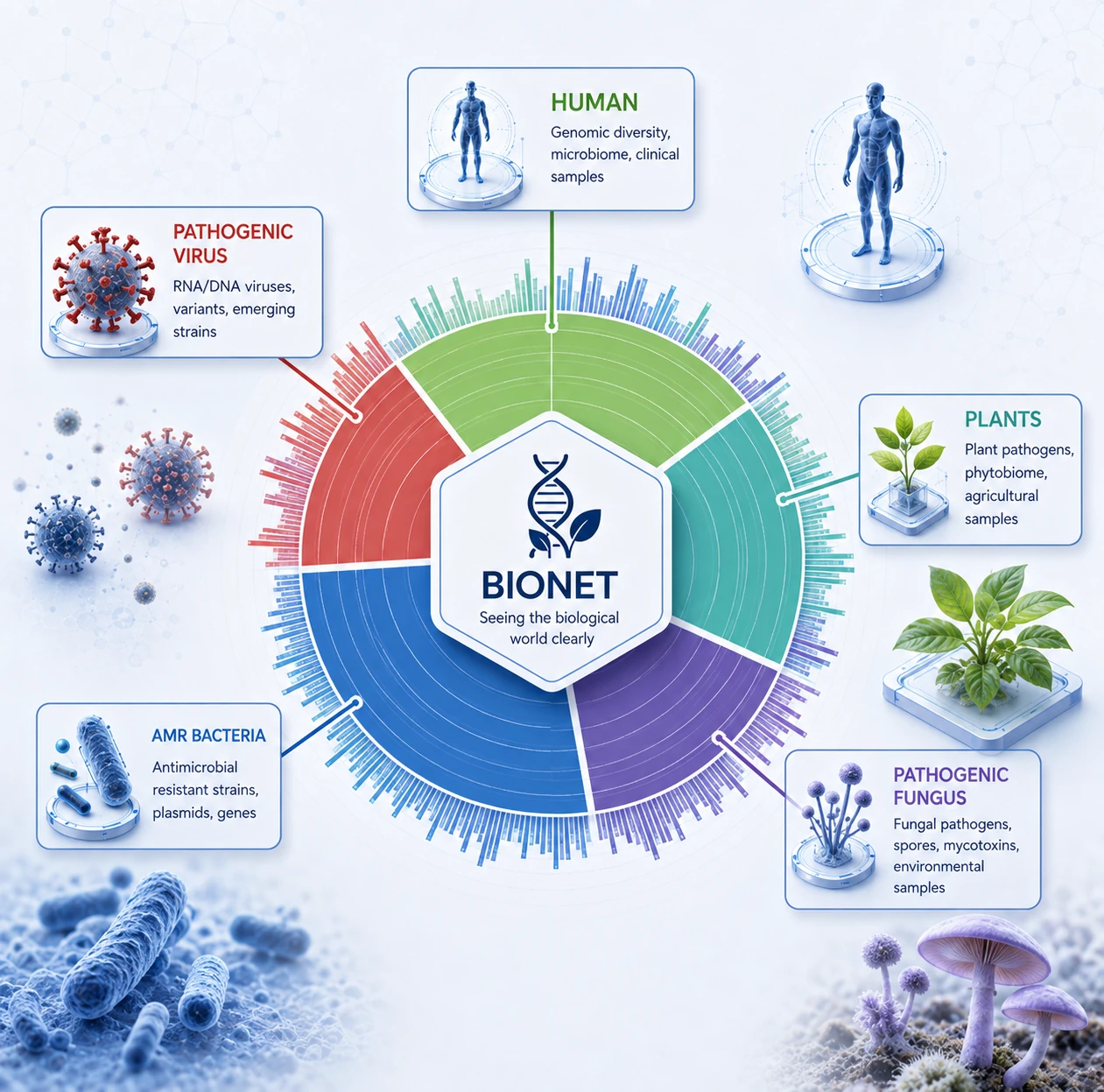
The first layer asks which organisms are present. BIONET identifies HIVE-Censuscope, Pathoscope, Kraken 2, and MetaPhlAn4 as complementary approaches. Censuscope iteratively subsamples and maps reads until diversity estimates converge across taxonomic levels. Pathoscope uses Bayesian inference to account for sequence quality and mapping uncertainty. Kraken 2 provides rapid k-mer classification. MetaPhlAn4 uses clade-specific marker genes. The operational choice can vary by organism class, sequencing modality, speed, sensitivity, and required taxonomic resolution.
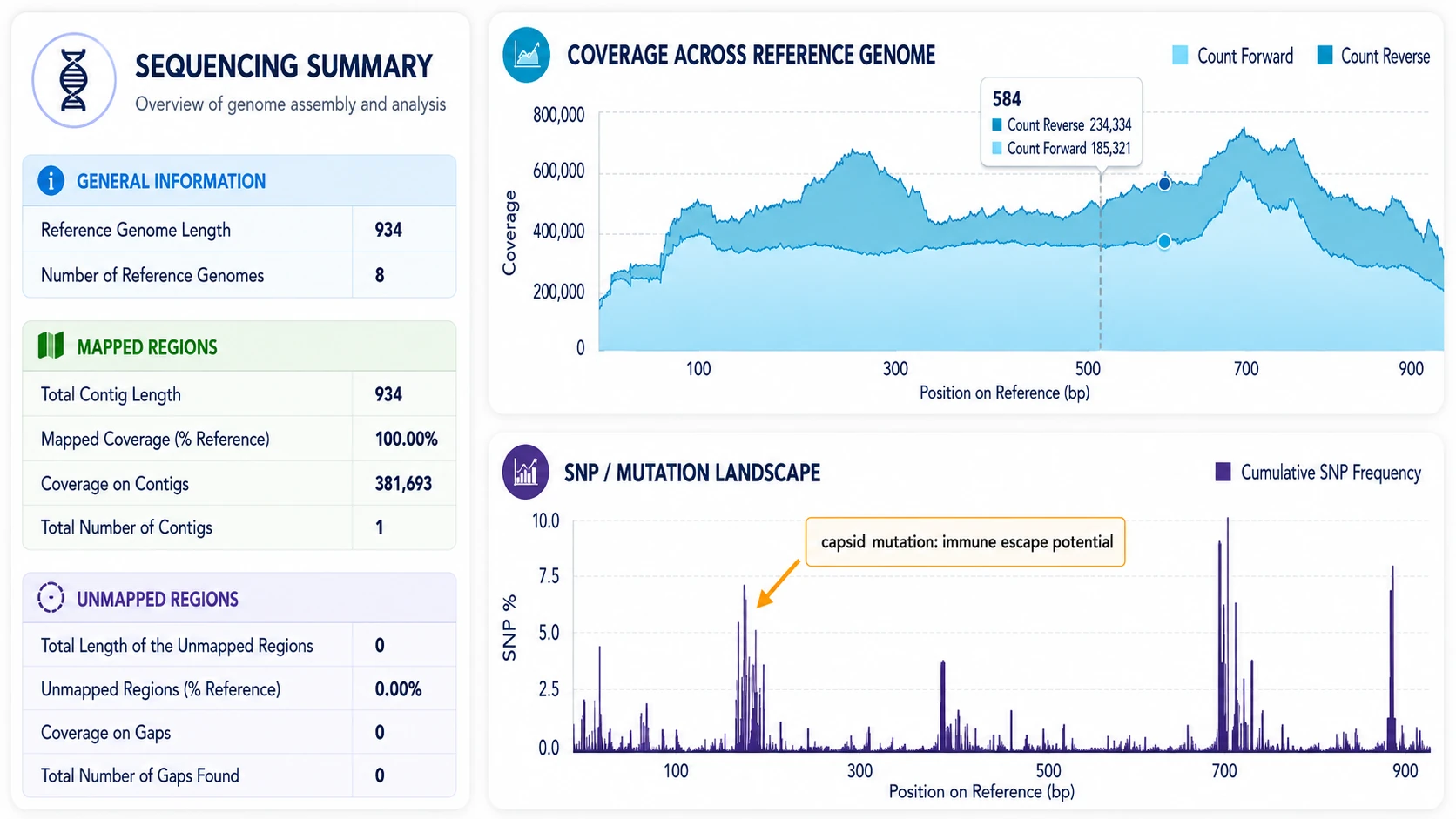
Species detection is followed by high-sensitivity characterization. HIVE-Hexagon is described as a read aligner optimized for diverse viral and bacterial genomes, including more distant homology than conventional human-genome-oriented short-read tools may capture. HIVE-Heptagon then produces coverage and pileup information, point mutations, insertions, deletions, and structural variation. These layers allow BIONET to distinguish a simple organism hit from a biologically meaningful deviation.
Functional annotation converts sequence differences into biological interpretation. HIVE adapted use of NCBI, EBI, PIR, and UniProt resources to map coverage and variation to protein domains and functional elements. A missing pathogenicity island, an inserted conserved domain, a mobile resistance element, or an altered regulatory region can therefore be evaluated differently from a neutral sequence change. Species-specific biological priors and subject-matter expertise remain essential because the same genetic event may have different implications in different organisms.
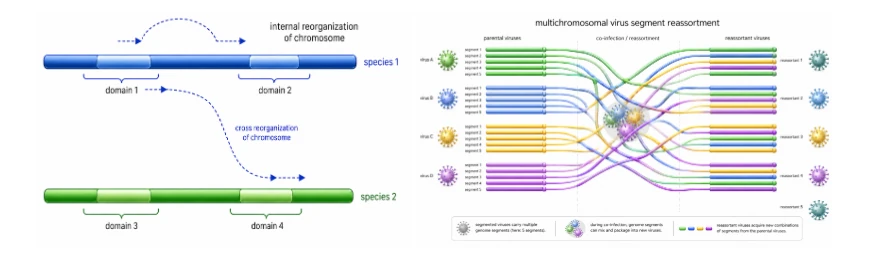
Structural and recombinant detection is central to the adversarial mission. HIVE-Nonagon, also described as a Defective Viral Genome Profiler, traces split or chimeric alignments across different genomic regions or species. It is intended to identify translocations, copy-number changes, strand reversals, cross-species recombination, unexpected functional insertions, and sequence jumps into motifs associated with synthetic biology. These signals do not prove intent, but they create high-value indicators for expert review and attribution analysis.
Clonal diversity provides another early-warning channel. RNA viruses and many bacterial pathogens exist as populations of related variants rather than a single genome. Conventional consensus assemblies can collapse that diversity and discard weak but important signals. HIVE-Hexahedron is described as assembling multiple related genomic trajectories into a “Nephosome,” preserving the structure and abundance of quasi-species. This supports detection of emerging variants, unusual diversification rates, selection pressure, and subpopulation patterns inconsistent with expected evolution.
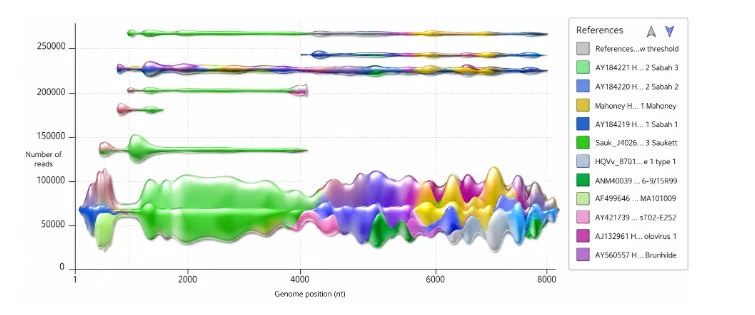
Reference-based analysis is deliberately followed by de novo analysis of unmapped reads. Most unmapped content in environmental and clinical samples will be ordinary regional biological diversity. A smaller subset may form contigs or scaffolds with open reading. Frames and conserved domains related to pathogen families. HIVE-adapted de novo tools, combined with FDA-ARGOS quality-control protocols, can flag high-quality assemblies for resampling and expert assessment. Over time, region-specific background libraries can help separate normal “dark matter” from truly novel signals.
The metagenomics/metaproteomics concept adds functional confirmation. Sequencing can reveal that a toxin, resistance gene, promoter, or unusual splice is genetically present; proteomics can help determine whether the relevant protein is expressed and at what level. This distinction between latent capability and active biological threat is particularly important for bacteria, fungi, yeasts, protozoa, and other complex samples where genomic potential alone may overstate operational risk.
HIVE also provides the feature space for longitudinal AI. H2O supports three-dimensional operational representation of time, location, and genomic signal, supported by functional discriminant models, Fourier and wavelet methods, spatial-temporal diffusion models, continuous hidden Markov models, recurrent neural networks, and prospective genomic foundation models. The purpose is not to replace biological analysis with a single black box. It is to learn expected behavior, define statistically bounded baselines, and flag low-probability deviations for human and operational review.
| Analytic layer | Primary question answered | Illustrative output |
|---|---|---|
| Taxonomic census | What organisms are present? | Species/clade identities, abundance, diversity, co-occurrence. |
| Coverage and variation | How does the observed genome differ? | SNVs, indels, structural changes, coverage gaps, entropy. |
| Functional annotation | What might the differences do? | Virulence, AMR, toxin, regulatory, mobile, and host-interaction implications. |
| Recombinant detection | Are biological pieces arranged abnormally? | Chimeric reads, translocations, cross-species joins, synthetic motifs. |
| Clonal diversity | What is changing below the consensus? | Subpopulation trajectories, selection, emerging variants, diversification rate. |
| De novo discovery | What remains outside known references? | Contigs, ORFs, conserved domains, candidate novel organisms. |
| Proteomics and expressions | Is the species expressing pathogenicity? | Expression profiling, proteomics. |
| Longitudinal AI | Is behavior abnormal across time and place? | Anomaly scores, predicted ranges, low-probability deviations, propagation alerts. |
The final product is not a raw bioinformatics report. The BIONET portal concept separates technician triage, sample inventory, analyst diversity views, administrative controls, expert evidence review, and command reporting.
The signals on sample analysis can have different status: gray for processing, green for expected baseline, orange for elevated but explainable activity, red for unexpected pathogen or functional/propagation signal requiring attention, and blue for sample or data-quality failure.
This structure shortens the path from computation to action while preserving access to the underlying evidence.
HIVE IN ONE SENTENCE FDA-HIVE/H2O transforms sequencing and multi-omic data into a versioned, auditable chain of evidence about identity, variation, function, evolution, and anomaly, then presents that evidence at the level required by technicians, scientists, regulators, and commanders.
FEAST, Federated Ecosystem for Analytics and Standardization Technologies, is the architecture that allows the same certified analytic logic to operate across heterogeneous data sources respecting security and governance, without requiring centralized data aggregation.
FEAST was developed under the ARPA-H Biomedical Data Fabric program. The official ARPA-H program describes a national need to connect biomedical data from thousands of sources, overcome incompatible data dialects, improve provenance and reproducibility, enable multi-source AI/ML, and maintain privacy and security. The FEAST architecture translates those goals into two core technical ideas: agnostic federation and agnostic harmonization.
Agnostic federation moves computation to data instead of moving data to computation. Agnostic harmonization allows computers to discover what standards, protocols, vocabularies, and permissions are available at a site, then apply the transformations required by a validated application at the point of use. Together, these ideas allow BIONET to work with existing systems rather than requiring every participant to adopt one database, one schema, one cloud provider, or one governance model.
The complete FEAST fabric includes a Constitution layer of protocols, a network of participating nodes, one or more physical or virtual FEAST units at each node, application and virtual-machine repositories, reference knowledge bases, a Library of Transformation modules, BioCompute certification, search and query services, controllers, a Compute Motility Orchestrator, resource virtualization, encryption and signaling objects, research dashboards, and a control center. Each layer has a distinct role in making distributed execution predictable.
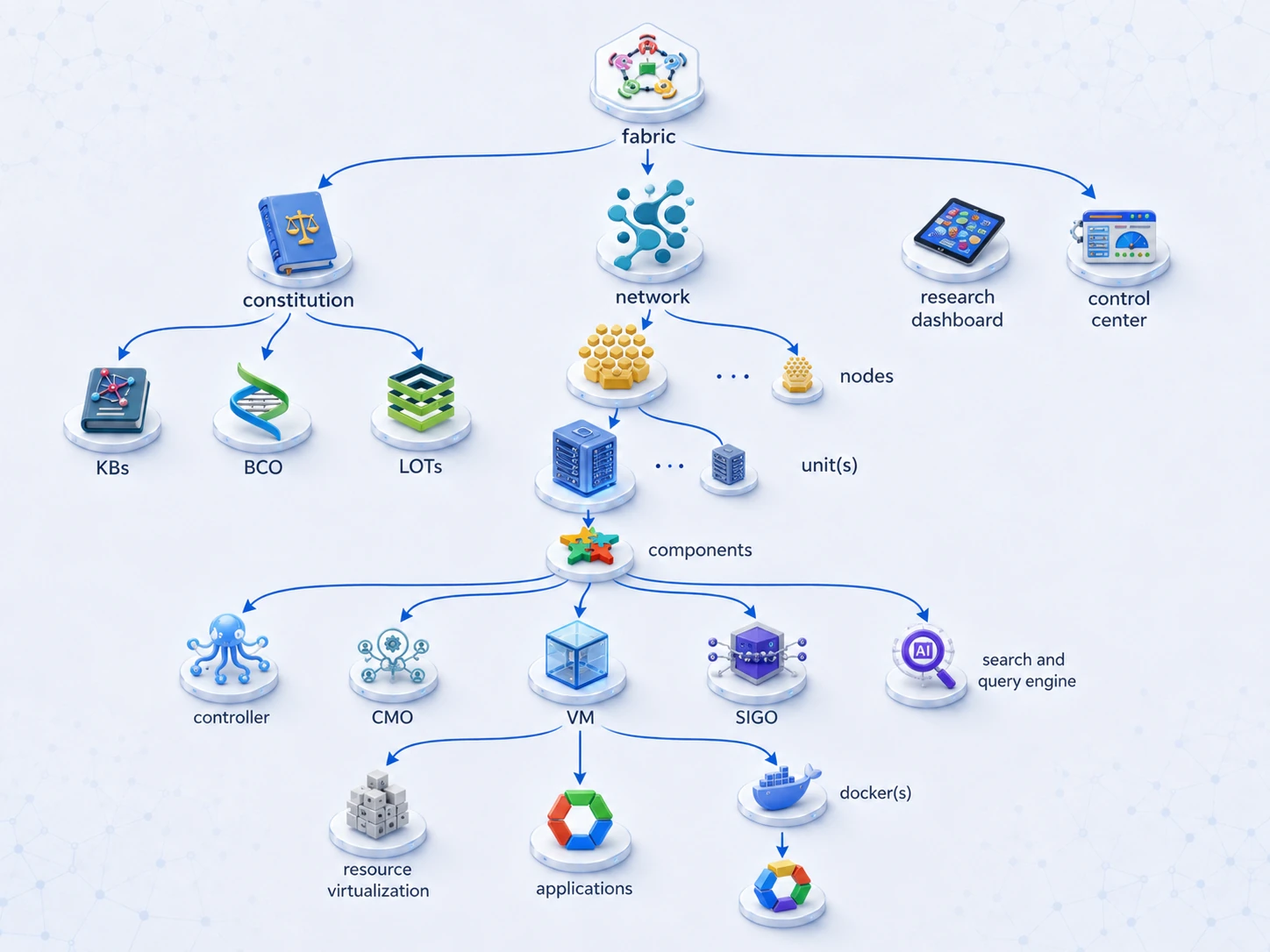
| FEAST component | Operational responsibility in BIONET |
|---|---|
| FEAST Constitution | Defines high-level handshake, type, communication, permission, and interoperability protocols. |
| Node and FEAST unit | Creates a governed execution enclave inside or adjacent to each participating organization. |
| Controller | Coordinates search, application launch, resources, certificates, job status, and communication with other nodes. |
| Compute Motility Orchestrator | Starts, suspends, transfers, resumes, and terminates virtualized analytic processes. |
| Resource virtualization | Captures file, API, and database access and redirects the application to authorized local resources. |
| Library of Transformations | Performs semantic mapping, syntactic repackaging, ontology translation, normalization, and decompression at runtime. |
| VM and application repositories | Distribute preconfigured analytic environments with correct code, dependencies, references, and versions. |
| BioCompute certification | Describes and validates applications for transparency, reproducibility, risk assessment, and controlled execution. |
| SIGO and access controls | Protect sensitive values and permit authorized re-identification only within the originating site. |
The FEAST Constitution is particularly important. It is not a single data standard. It is a protocol for discovering and communicating which standards a source and an application support, which transformations are available, which permissions apply, and how the requested data can be delivered correctly. This allows harmonization at the point of use. An organization does not need to replace its internal databases, and a validated HIVE application does not need to be rewritten for every site.
The Library of Transformations operationalizes this approach. LOT modules can translate semantic concepts, syntactic packaging, vocabularies, ontologies, units, coding systems, genomic formats, compression schemes, API conventions, and database dialects. Examples in the supplied architecture include FASTQ/FASTA and SAM transformations, runtime decompression, SQL-flavor harmonization, FHIR packaging, and FHIR-to-OMOP conversion. Transformation chains can be assembled when no single module connects the source and target representation.
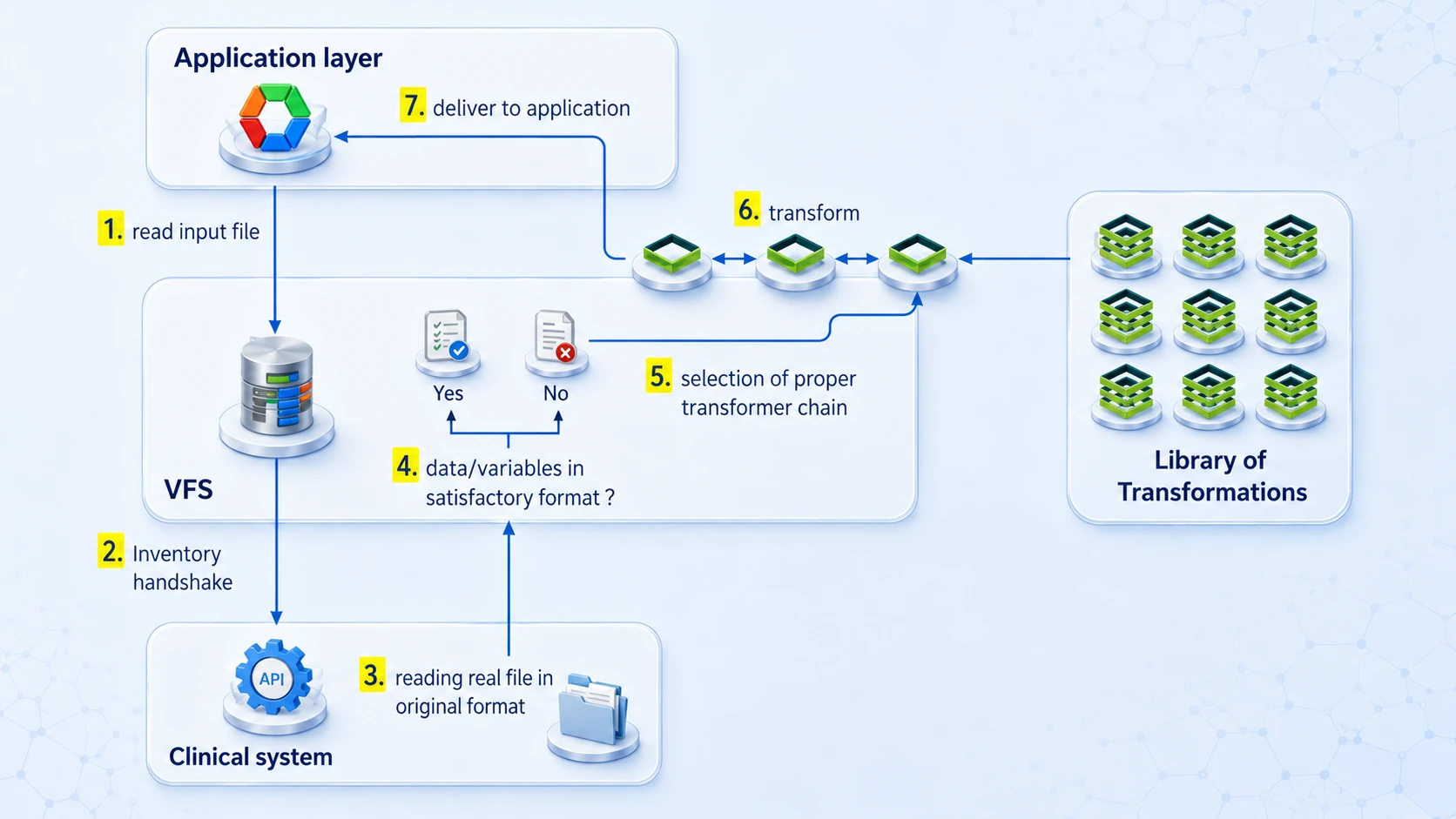
This is a crucial distinction from one-time data harmonization projects. Traditional integration requires every source to transform and maintain a duplicate standardized dataset before analysis can begin. FEAST encodes transformations once, validates them, and applies them as needed. New source standards and new application requirements can be added to the library without redesigning the entire network. For BIONET, this makes onboarding a new laboratory or surveillance domain a configuration and validation problem rather than a wholesale data-migration program.
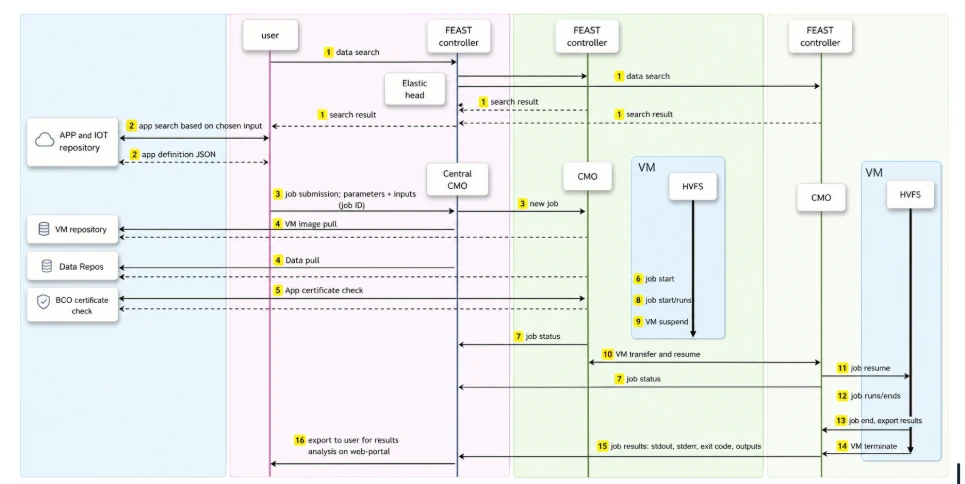
Compute motility is the second defining capability. A user or automated surveillance process first performs a distributed search that returns metadata about available data, not the data themselves. A validated HIVE application is selected from the repository, together with required ARGOS references and dependencies. The FEAST controller verifies the BioCompute certificate, instantiates the virtual processes locally, maps authorized resources, and starts execution. When the application requires a resource available only at another node, the process can be suspended, transferred, and resumed inside the destination node’s enclave.
Only the application state and authorized supporting assets move. Site data, staging stores, local controller state, and protected source systems do not migrate. From the application’s perspective, the required resource becomes available through a virtualized file system, socket, or database interface. From the institution’s perspective, the computation enters a controlled enclave, accesses only pre-approved resources, and produces only defined outputs.
This operating model is referred to as Motile Intelligence. The intelligence is motile because the algorithmic capability, model state, reference assets, and validated process move across the network while sensitive biological data remain under local governance. A HIVE detection workflow can therefore analyze a hospital, a wastewater laboratory, an agricultural site, an overseas partner, and a defense laboratory using the same analytic definition without copying all source data into one repository.
Security is architectural rather than an afterthought. FEAST units are deployed as on-premises appliances or virtual units inside a private network. Firewalls restrict traffic to known FEAST peers and certified repositories over approved channels. Resource virtualization blocks unauthorized file, port, IP, API, and database access. Site-specific data inventories define which resources, protocols, authorization methods, and de-identification procedures are available. Temporary staging areas are wiped between analytic sessions.
FEAST architecture also implements SIGO (Signaling Objects), a runtime encryption and de-identification paradigm in which protected values can be reversibly re-identified only by authorized users and only in between encrypted memory and CPU, not data source, at the originating site. When an application reaches a protected resource, the source metadata can guide the computation to the node where decryption and permitted use are possible. Results do not even need to be re-encrypted before they are exposed because only the CPU accesses the unencrypted data, not movable memory.
Auditability supports both governance and incident response. BIONET and FEAST materials describe logging at application, system, database, and user levels, with timestamps, identity, actions, results, permissions, derived outputs, and configuration versions. BioCompute objects capture process rationale, datasets, code and dependency versions, and expected behavior. The goal is a reconstructable chain of evidence: what ran, where it ran, by whom, what it accessed, what transformations were applied, and what result was produced.
Only the application state and authorized supporting assets move. Site data, staging stores, local controller state, and protected source systems do not migrate. From the application’s perspective, the required resource becomes available through a virtualized file system, socket, or database interface. From the institution’s perspective, the computation enters a controlled enclave, accesses only pre-approved resources, and produces only defined outputs.
This operating model is referred to as Motile Intelligence. The intelligence is motile because the algorithmic capability, model state, reference assets, and validated process move across the network while sensitive biological data remain under local governance. A HIVE detection workflow can therefore analyze a hospital, a wastewater laboratory, an agricultural site, an overseas partner, and a defense laboratory using the same analytic definition without copying all source data into one repository.
Security is architectural rather than an afterthought. FEAST units are deployed as on-premises appliances or virtual units inside a private network. Firewalls restrict traffic to known FEAST peers and certified repositories over approved channels. Resource virtualization blocks unauthorized file, port, IP, API, and database access. Site-specific data inventories define which resources, protocols, authorization methods, and de-identification procedures are available. Temporary staging areas are wiped between analytic sessions.
FEAST architecture also implements SIGO (Signaling Objects), a runtime encryption and de-identification paradigm in which protected values can be reversibly re-identified only by authorized users and only in between encrypted memory and CPU, not data source, at the originating site. When an application reaches a protected resource, the source metadata can guide the computation to the node where decryption and permitted use are possible. Results do not even need to be re-encrypted before they are exposed (because only CPU accesses the unencrypted data, not movable memory).
Auditability supports both governance and incident response. BIONET and FEAST materials describe logging at application, system, database, and user levels, with timestamps, identity, actions, results, permissions, derived outputs, and configuration versions. BioCompute objects capture process rationale, datasets, code and dependency versions, and expected behavior. The goal is a reconstructable chain of evidence: what ran, where it ran, by whom, what it accessed, what transformations were applied, and what result was produced.
FEAST IN ONE SENTENCETFEAST enables the same validated HIVE/H2O analytics package to execute across independently governed sites by moving certified computation to data, standardizing at runtime, and returning authorized results with provenance.
Problem: The global biological environment cannot be monitored by a static pathogen list, a single sequencing algorithm, or one centralized repository. BIONET integrates the full chain while accepting that the most important data will remain distributed and independently governed.
FEAST packages the HIVE workflow, required software dependencies, ARGOS reference assets, configuration, output definitions, and validation information into a controlled execution object. The supplied architecture uses virtual-machine and application repositories together with IEEE BioCompute objects. Before execution, FEAST validates the certificate and confirms that the destination site satisfies the application’s security and resource requirements.
At each site, FEAST maps the local data environment to the workflow. Genomic files may be compressed or stored in different formats. Laboratory metadata may come from a LIMS. Clinical context may come through FHIR, SQL, or another interface. Geographic and temporal metadata may use local conventions. LOT modules translate the required elements into the representation expected by the HIVE application without exposing the source’s unrelated systems.
HIVE then binds those references to validated detection workflows. A taxonomic pipeline knows which reference databases to search. Alignment and variation workflows know which genomes and coordinates define expected structure. Functional annotation knows which domains, resistance genes, toxins, promoters, mobile elements, and pathogenicity regions are relevant. Recombinant and clonal-diversity tools use the same reference universe to interpret cross-reference joins and subpopulation trajectories.
The workflow produces a structured signal package rather than uncontrolled data export. That package can contain sample-quality status, organism identities, abundance, coverage, variants, functional annotations, recombinant structures, clonal diversity, de novo candidates, expression evidence, anomaly scores, confidence measures, geospatial and temporal context, and recommended escalation. Local policies determine which elements remain local and which can be shared with a regional or national command layer.
The connection also runs in the opposite direction. HIVE can produce high-quality candidate assemblies from unmapped reads, identify previously uncharacterized variants and recombinants, and reveal functional elements that require curation. After independent scientific validation, those discoveries can enrich ARGOS and associated knowledge bases. The system therefore moves from a static database-and-tool relationship toward a learning reference-and-detection ecosystem. This closed loop increases detection confidence in four ways.
The learning loop is governed. A red signal does not automatically become a new ARGOS reference or an attribution judgment. Candidate discoveries move through resampling, independent confirmation, assembly QC, functional review, epidemiologic and operational assessment, and curation. Only qualified additions are promoted into future reference releases or model baselines. This protects BIONET from contaminating its own knowledge layer with artifacts, false positives, or unreviewed assumptions.
BIONET addresses the problem as an integrated architecture. FDA-ARGOS establishes a trusted reference and quality-control foundation. FDA-HIVE/H2O applies a deep stack of regulatory genomic and AI analytics to identify organisms, variation, function, recombination, clonal diversity, novelty, expression, and abnormal propagation. ARPA-H BDF FEAST moves those validated workflows across independently governed sites, performs standardization at runtime, preserves local sovereignty, and returns authorized outputs with provenance.
The result is a closed biological intelligence loop. Samples are observed locally. Analytics execute where the data reside. Findings are compared against trusted references and expected baselines. Signals are escalated according to severity and confidence. Experts and leaders receive role-appropriate evidence. Validated discoveries improve future references and models. The network becomes more capable without requiring every participant to surrender its data or change its core mission.
BIONET is therefore best understood not as another surveillance database, but as a biological intelligence operating system: a secure, federated, regulatory-grounded capability that integrates existing sensors and institutions into a common Indications and Warning (I&W) architecture for naturally evolving pathogens and adversarial biological constructs.
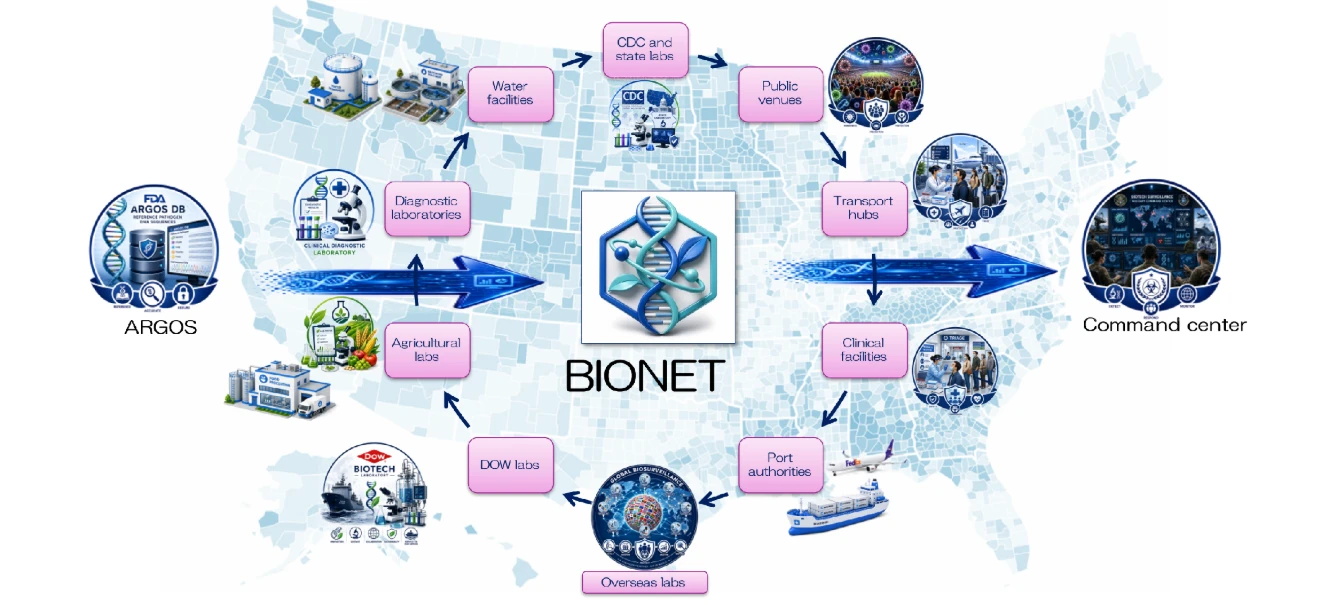
The U.S. operating concept is intentionally heterogeneous. A wastewater site may contribute routine population-level pathogen signals. A hospital may contribute clinical sequencing and selected outcomes under local privacy rules. A port may contribute environmental or cargo-related observations. Agricultural laboratories may monitor livestock and crop pathogens. State and CDC laboratories may contribute confirmatory public-health data. Defense laboratories may contribute force-health, installation, or mission-specific observations. Overseas partners may contribute local analysis without exporting underlying data.
The value is not simply the number of nodes. It is the ability to analyze comparable observables across domains and time. A pathogen appearing in wastewater, a clinical laboratory, a transport hub, and an agricultural environment may mean something very different from a single isolated detection. BIONET allows common analytics and reference versions to test whether those signals represent expected background, correlated propagation, cross-species movement, a supply-chain event, or an anomalous deployment pattern.
The network also supports different connectivity modes. Connected nodes can receive updated references, applications, and models through certified repositories and participate in continuous surveillance. Intermittently connected or contested nodes can receive signed HIVE-in-a-Box updates through controlled offline media, execute locally, and synchronize approved outputs later. The analytic definition remains consistent even when network conditions differ.
Internationally, federation is not merely a technical convenience. It is a diplomatic and sovereignty mechanism. Partners may be willing to run a transparent, validated analytic package inside their own infrastructure even when they are unwilling or legally unable to export genomic or clinical data. A common reference and analytic standard can therefore create shared warning without requiring shared custody of every record.
| Operating domain | Illustrative data and observations | Primary governance concern |
|---|---|---|
| Clinical and diagnostic | NGS, laboratory results, selected symptoms, outcomes, sample metadata. | Patient privacy, institutional approval, clinical cybersecurity. |
| Public health | State/CDC testing, outbreak investigations, reference confirmations. | Public-health authorities, reporting law, state/federal coordination. |
| Environmental and wastewater | Community-level genomic and chemical context, time/location trends. | Utility operations, environmental regulation, sampling consistency. |
| Agriculture and food | Livestock, crop, feed, processing, and supply-chain pathogen data. | Commercial sensitivity, food security, USDA/state authorities. |
| Ports and transportation | Environmental, cargo, traveler, or facility-associated observations. | Operational continuity, jurisdiction, chain of custody. |
| Defense and overseas | Force health, installation, mission, partner-lab, and geospatial observations. | Classification, mission authorities, host-nation sovereignty. |
WHAT BIONET IS NOTBIONET is not a replacement for CDC, FDA, state, clinical, agricultural, defense, or international systems. It is the reference, analytic, federation, and signaling layer that allows those systems to contribute to a common biological warning picture.
| Step | Operational action |
|---|---|
| 1. Observe and collect | A participating site collects a clinical, environmental, agricultural, food, transport, wastewater, or defense sample and records minimum contextual metadata. |
| 2. Generate and quality-check data | Sequencing, laboratory, sensor, or multi-omic systems produce raw data. Local and HIVE quality controls determine whether the sample is fit for analysis. |
| 3. Discover resources | FEAST searches participating nodes for relevant data and returns authorized metadata about availability, representation, and access conditions. |
| 4. Select the certified workflow | The system selects the appropriate HIVE application, ARGOS reference package, parameters, and BioCompute certificate for the target mission. |
| 5. Execute locally | FEAST instantiates the validated environment inside the site enclave, maps local resources, and applies runtime transformations. |
| 6. Detect and characterize | HIVE performs taxonomy, coverage, variation, functional annotation, recombination, clonal diversity, de novo, multi-omics, and anomaly analysis as appropriate. |
| 7. Produce a signal package | The workflow generates quality status, findings, confidence, context, evidence links, and recommended next steps. Only authorized outputs leave the node. |
| 8. Triage and escalate | Green findings remain in routine monitoring. Orange findings trigger review or resampling. Red findings trigger immediate expert and command-center attention. Blue findings return for data-quality correction. |
| 9. Correlate across domains | BIONET compares signals across locations, time, hosts, environments, and mission systems to identify coherent patterns and anomalies. |
| 10. Validate and learn | Confirmed discoveries can update regional baselines, HIVE models, functional knowledge bases, and—after curation—future ARGOS reference releases. |
A minimum data package is essential for consistent operations. At a minimum, BIONET should define raw or processed sequence location, sample and assay quality attributes, collection time and location, specimen or environmental source, instrument and protocol version, relevant host or site context, ARGOS and HIVE release identifiers, transformation history, thresholds, and escalation logic. Sites may contribute more context, but the minimum package should be stable enough to support comparison across the network.
Verification and validation should be scenario-driven. Known-pathogen tests establish sensitivity, specificity, and reproducibility. Divergent-strain and recombinant challenges test structural interpretation. Synthetic controls test engineered-element detection without requiring operational threat agents. Longitudinal simulations test time-to-warning, false-positive burden, and model behavior. Multi-site exercises test governance, network operations, and command handoff rather than only algorithm accuracy.
The workflow must preserve local action. A site should not wait for a national command center to correct an obvious quality failure or respond to a locally significant pathogen. BIONET adds shared awareness and common escalation; it does not remove the authority of local operators. This dual-level design is necessary for both resilience and adoption.
The supplied portal concept uses a five-state signal system. Gray indicates analysis in progress. Green indicates activity within an expected baseline. Orange indicates elevated or unusual activity that may remain consistent with known seasonal or local patterns. Red indicates an unexpected pathogen, functional element, genetic alteration, or propagation signal requiring immediate attention. Blue indicates that processing was halted because sample integrity or data quality was insufficient.
ATTRIBUTION DISCIPLINENo genomic algorithm, including BIONET, should be described as independently proving adversarial intent. BIONET can identify signatures inconsistent with expected biology and provide a traceable evidence base for integrated attribution.
Reporting must match the user.
This avoids the two common failures of technical warning systems: overwhelming leaders with raw data or presenting opaque scores that cannot withstand scrutiny.
Lock mission, governance, use cases, and success measures.
Representative deliverables: Charter; lead authority; minimum data package; signal definitions; reference and application release policy; pilot sites.
Demonstrate ARGOS/HIVE/FEAST integration in a limited high-value scenario.
Representative deliverables: 10 nodes; one pathogen class or AMR/wastewater mission; certified workflow; local and command dashboards; V&V plan.
Test correlation across clinically and operationally different environments.
Representative deliverables: Clinical, environmental, agricultural/food, port/transport, and defense nodes; Orange/Red review board; exercises.
Operate continuous surveillance with governed updates and sustainment.
Representative deliverables: 24/7 monitoring; reference/model release cycles; service-level objectives; integration with agency command systems.
Extend common analytics while preserving partner sovereignty.
Representative deliverables: Partner-node certification; regional baselines; disconnected operations; cross-border signal-sharing agreements.
Pilot selection balances mission value with governance feasibility. Respiratory pathogens, antimicrobial resistance, wastewater monitoring, force health, port surveillance, and agricultural threats are repeatedly identified in the supplied materials as high-value starting points. A good pilot contains enough diversity to prove federation but is narrow enough to establish thresholds, reference scope, sample metadata, and decision pathways without being consumed by institutional complexity.
Each node should follow a repeatable onboarding process: scope and capacity assessment; site governance and cybersecurity review; inventory of LIMS, EMR, file, API, genomic, imaging, and coding resources; selection of physical or virtual FEAST deployment; installation and configuration; identity and access integration; portal configuration; penetration testing; documentation; and go-live approval. Scaling cost is therefore partly technical and partly administrative. Security approvals and site-specific governance will remain major schedule drivers.
Sustainment requires explicit release management. ARGOS reference packages, HIVE applications, LOT transformations, BioCompute certificates, AI models, alert thresholds, and portal logic all evolve. BIONET should operate a controlled release train with validation status, backward compatibility, rollback procedures, model-drift monitoring, and emergency-update pathways. Sites must know exactly which release produced every signal.
The architecture should be designed for degraded operations. Critical edge nodes may need local reference packages, cached transformation modules, signed model updates, redundant compute, and the ability to continue routine detection when central services are unavailable. Results can be queued for later synchronization. A global warning network that depends on uninterrupted connectivity would be least reliable during the events when it is most needed.
It is “field an end-to-end biological Indications and Warning (I&W) capability with a qualified reference backbone, validated regulatory analytics, federated execution, and a governed decision layer.

Dr. Vahan Simonyan is a multidisciplinary scientist and technology executive whose career spans quantum physics, chemistry, nanotechnology, genomics, biomedical informatics, regulatory science, and large-scale scientific computing.
Read profile →I have over 20 years of experience in business development, managerial and health IT consulting.
Read profile →